On Camera: A Spray Tan for Photos, Shoots and Filming
How to plan a spray tan for headshots, shoots and filming: tone before depth, timing for the camera, and what to tell your photographer.
 By Jana · May 21, 2026 · 6 min read

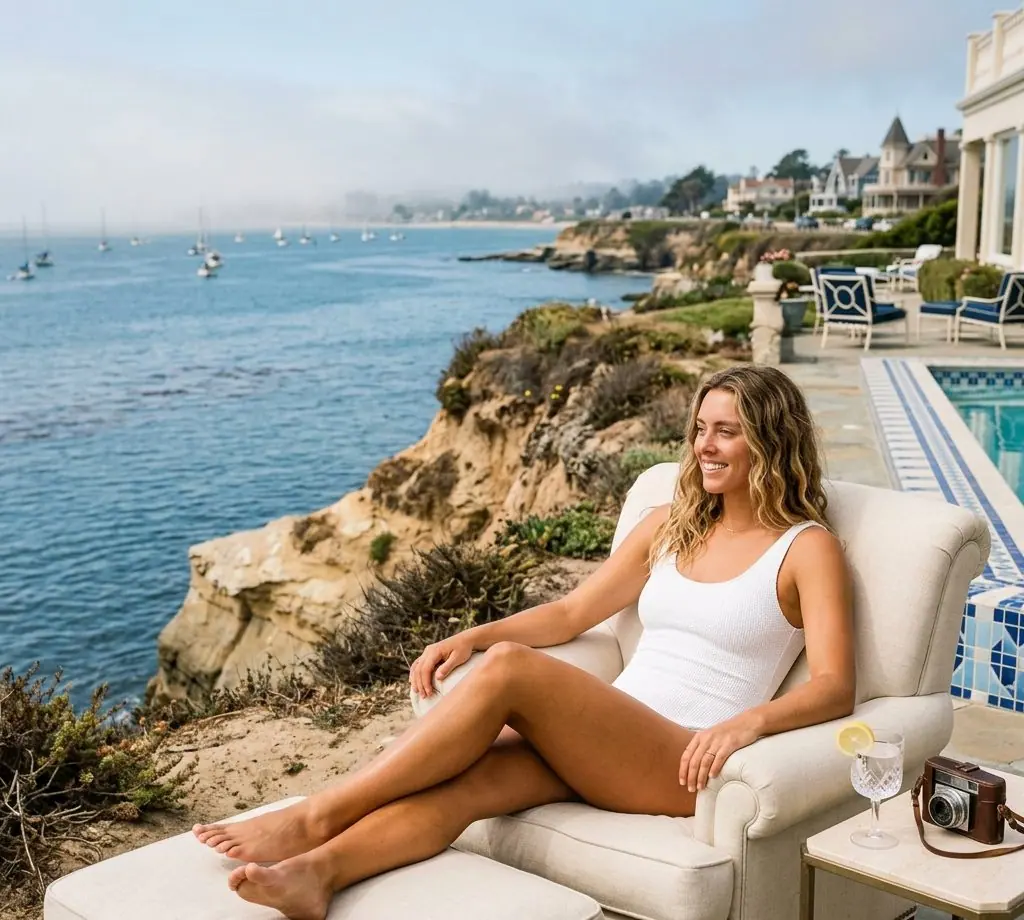
Picture a real estate agent booking new headshots. Her old ones are five years out of date, her photo goes on every sign from Aptos to Scotts Valley, and the photographer has suggested West Cliff at golden hour, with the ocean softly out of focus behind her. The light will be beautiful. It will also show everything.
A camera notices what a mirror forgives. Under studio lights or a long lens, color that is a shade too warm, or a little uneven at the wrist, is the first thing anyone sees. On camera, the goal is color that simply reads as you on a very good week.
“Working in front of the camera means every small detail is magnified. If a tan looks artificial, it's noticed immediately. The finish looks organic under natural light and studio lighting.” Sophie T.
Here is how I plan a tan for the camera, from a single headshot session to a project that runs for weeks.
Tone before depth
When she comes in, the first thing we talk about is undertone, not depth. Photographers and directors often have a view, and the light you'll be shooting in matters. Golden-hour light on West Cliff is already warm, so a very warm formula on top of it can read warmer than you'd expect. Studio light is cooler and flatter, and it forgives less.
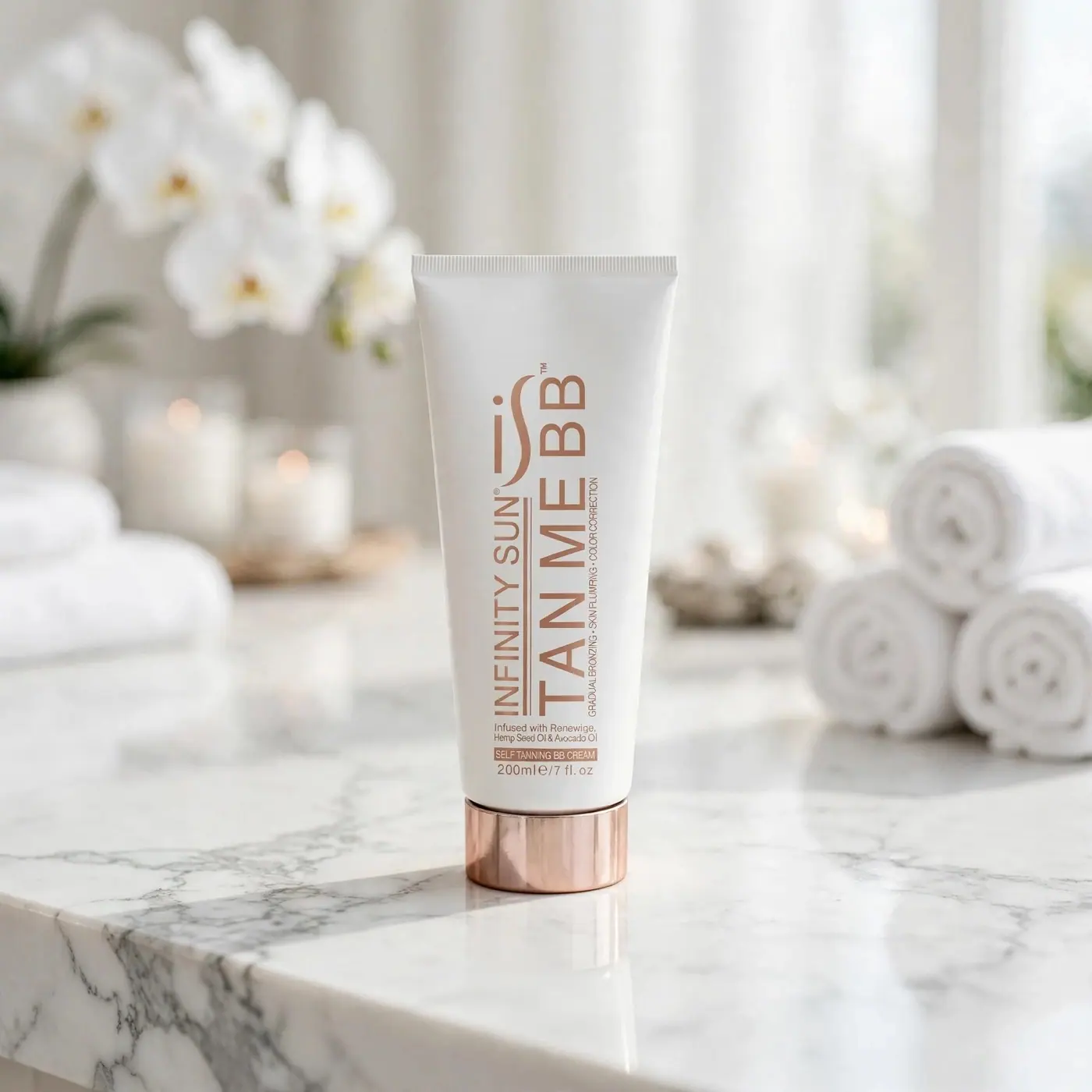
A neutral formula such as Unity NR, or the cool, even brown of Rapid Development, tends to read naturally across mixed light. For her, Unity NR is the starting point: neutral, with hyaluronic acid and niacinamide in the formula, and a rinse at 2, 4 or 6 hours that lets us set the depth precisely.
Depth comes second. For headshots, a measured depth is usually the right one. The camera should register healthy skin, not a tan.
Time it so the camera sees the finished color
She books one to two days before the shoot. The color takes about a day to develop, and her first rinse washes away the bronzer that shows during development, leaving the finished tan. Shooting on the day of the appointment would mean photographing the guide color, which is never the plan.
The extra day is also breathing room. If something isn't right, I want to hear about it within 24 hours, and there's still time to take care of it before the shoot.
Hands, face and feet
These are what a camera finds first: the hand resting on a railing, the jawline in profile, bare feet in a lifestyle shot on the sand.
In the days before her appointment she moisturizes them regularly, because dry skin catches extra color. On the day, she keeps them lotion-free. Between visits, a Glow on the Go Finishing Mist refreshes face, hands and feet evenly, which is useful when one shoot turns into two.
Preparing for the session
The preparation is the same as for any tan, done carefully. She exfoliates gently in the days before, shaves a day ahead, and arrives clean, with no deodorant, lotion or makeup on areas being tanned. She wears something loose and dark, and saves her makeup for the morning of the shoot.
On shoot day, she tells her makeup artist she has a tan, so foundation can be matched to the finished color rather than her winter skin.
What to tell your photographer
A short message to the photographer before the shoot makes everyone's job easier. Tell them you'll have a fresh spray tan, roughly how deep, and the formula's tone, whether neutral or cool. Ask whether they have a preference about undertone for the light they're planning. Good photographers are glad to be asked, and some will tell you something about the location you wouldn't have known: that the studio uses warm lights, or that the afternoon sun on a particular stretch of West Cliff turns everything gold.
Bring the answer to your appointment, and we'll choose with it in mind.
Engagement photos and family portraits
Headshots aren't the only time a camera decides how you'll remember a season. Engagement photos on the beach at Seabright, a family portrait in the redwoods with three generations squinting into the light, maternity photos in a sunlit field: each of these lives on a wall or in an album for years.
The plan is the same. A measured depth, a tone chosen for the light, and an appointment one to two days ahead so the camera sees the finished color. For a family portrait, there's a quiet bonus: when several family members tan before the same session, everyone's color sits in the same range, and nobody looks pale beside a sibling who just came back from Hawaii.
When the camera is your job
For people whose work happens on camera every week, such as presenters, content creators, instructors who film their classes, and anyone building a personal brand online, the tan stops being an event and becomes part of the routine. Phone cameras and ring lights are surprisingly unforgiving, and they show uneven color as clearly as any studio lens.
For them, the rhythm matters more than any single appointment. A lighter tan on a regular schedule keeps the color steady from one video to the next, so viewers see the same person every week.
When the shoot lasts for weeks
Now picture a different client: an actor on a production filming across six weeks, with scenes shot out of order. A scene from week five might be cut directly next to one from week one. Here, depth matters less than continuity. The color in every scene has to match.
“Continuity is everything when you are filming multiple scenes across several weeks. I can trust that the tan will match every time and fade out cleanly.” Dan T.
For a production, we build a schedule rather than a single appointment. The formula and the rinse time stay the same every visit, and appointments fall on a steady rhythm so the color never fades between scenes. Many on-camera clients find a lighter, more frequent tan easier to keep consistent than a deep one. If the shooting schedule changes, as it always does, text me the new dates and we'll move the appointments with it, so the rhythm holds even when the call sheet doesn't.
Because every tan here is applied by the same hands, nothing gets lost from one appointment to the next. I keep track of the formula and the rinse time, and every visit starts where the last one left off.
Headshots on short notice
Sometimes the shoot isn't three weeks away. The photographer had a cancellation, the agency needs new photos by Friday, the conference program goes to print tomorrow. Online booking stays open until 12 hours ahead, and same-day tans are often possible by call or text, so it's always worth asking.
If the shoot is tomorrow, tell me when you text. We'll choose a formula with a shorter rinse so you can rinse this evening and the guide color is gone before the camera arrives. The color keeps deepening for about a day, so we keep the depth measured and plan around the time of the shoot.
What the appointment is like
For anyone new to this, the appointment itself is simple. It takes about twenty minutes, one client at a time, in a private studio upstairs on Capitola Road. We talk first, then I apply the color, and you leave with your rinse time and a short list of what to do before the shoot.
Working with the wardrobe department
Costume fittings and spray tans need a little coordination. Ask wardrobe what you'll wear in the scenes that matter most, and whether anything is pale or delicate. The bronzer that shows during development rinses away in your first shower, and the finished tan washes out of most fabrics, but it's always easier to plan fittings for the day after your rinse.
After the shoot
Once the photos are done, the tan carries on like any other. With daily moisturizing and gentle cleansing, it usually lasts 7 to 14 days and fades evenly. If there's a second session coming, such as a follow-up shoot or a speaking event two weeks later, we can plan the next appointment so the color in both sets of photos matches.
The headshots, and after
Back on West Cliff, the photographer lifts the camera as the sun drops toward the water. The light is warm and low and kind, and the color on her skin simply looks like her, rested and confident. The new headshots go on the signs, the website and the business cards, and for the next five years they show the agent her clients actually meet.
If you have a shoot coming up, text me the date and a word about the light, and I'll plan the rest with you.